

Introduction
WordPress theme is a built-in tool that can alter the website’s functionality and design. It makes website creation quicker and simpler. It controls how your website looks, feels, and behaves.
A WordPress theme is a collection of files that specify the design and layout of your website, including templates, stylesheets, scripts, and assets. It modiifies the necessary elements like headers, footers, typography, colors, page layouts, and responsiveness. A theme provides a readymade structure that you can customize based on your needs. A theme is made up of template files, stylesheets (CSS), JavaScript scripts, etc. Together, these files present your content in an organized and eye-catching manner. For instance, a theme determines the layout of the homepage, the appearance of navigation menus, and the display of blog posts. Plugins are responsible for a website’s essential features, not WordPress themes.
However, contemporary themes often come with built-in capabilities, such as widget spaces, customisation panels, and compatibility with page builders like Elementor or the WordPress block editor (Gutenberg). A decent WordPress theme should be responsive (mobile-friendly), fast-loading, SEO-friendly, and frequently updated. Choosing the proper theme is crucial since it has a direct impact on user experience, website performance, and SEO rankings. Simply, we can say that a WordPress theme serves as your website’s visual base. It specifies how your material is presented to users and is essential for establishing a professional, functional, and engaging online presence.
What can a WordPress theme do?
Themes are responsible for changing the frontend layout and adding functionality to the WordPress website. Using the theme, you can create a full working website without coding. Themes can do the following:
- A theme can change the full layout of the website.
- You can display any type of content you can.
- You have full control over your website using the theme.
- Themes can be customized according to the user’s reference.
- You can add images and videos to your website.
- A theme can provide the flexibility and efficiency for your website.
- A theme makes your website more attractive.
Installations
Method 1
- Go to this link: wordpress.org.
- Search the theme and download ZIP file.
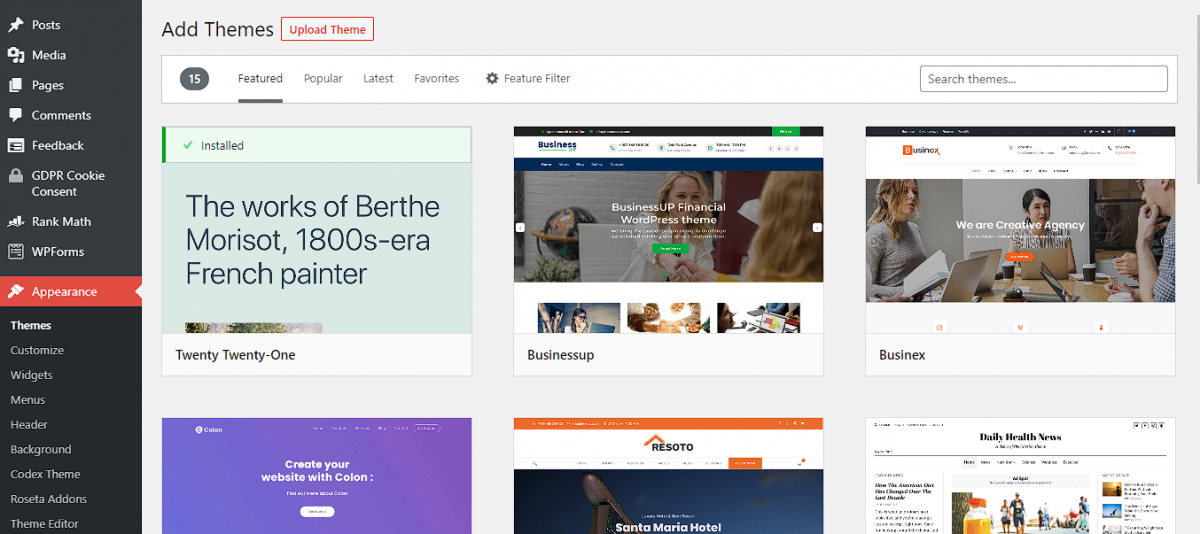
- Go to Dashboard > Appearance > Themes
- Upload it to your website, install and activate
Method 2
Another easy way of installing is to follow these steps below.
- Open your website admin panel.
- Go to the Appearance menu.
- Select the themes option and add a new
- Search for the required theme.
- Click and activate.
Advantages and Disadvantages
Advantages
- WordPress themes simplify and speed up website design without having a high level of coding expertise.
- The majority of themes are responsive, which makes websites function well on PCs, tablets, and mobile devices.
- Themes offer expert layouts that enhance a website’s overall look.
- Numerous WordPress themes improve a website’s search engine ranking by being SEO-friendly.
- Colors, fonts, menus, and site layouts can all be customized with themes.
- There are thousands of paid and free themes available for various website types and sectors.
- The user experience and speed of websites can be greatly enhanced with lightweight themes.
- Installing, updating, and managing WordPress themes from the dashboard is simple.
- The majority of contemporary themes feature well-known plugins like Elementor and WooCommerce.
- Over time, regularly updated themes enhance website performance, compatibility, and security.
Disadvantages
- The performance of websites is slowed down by some themes’ superfluous elements and scripts.
- Themes with poor coding might lead to technical problems and security flaws.
- Free themes frequently offer few options for support and customization.
- Changing themes can occasionally cause layouts, widgets, or website settings to malfunction.
- Annual renewal or license fees can make premium themes costly.
- Some themes rely significantly on page builders, which makes migration challenging in the future.
- An excessive number of customization options might be confusing to novices and make managing a website more difficult.
- WordPress changes may cause outdated themes to stop functioning properly.
- Rankings may suffer from themes that are not optimized for search engines.
- Themes that are heavy with excessive animations and effect that can reduce user experience and increase loading time.
Free WordPress Themes
Free WordPress themes are a useful alternative for novices, bloggers, students, and small businesses looking to construct a website without investing in design from the start. These themes are available from the official WordPress Theme Directory and can be easily installed using the WordPress dashboard. They include crucial features, including adaptable layouts, rudimentary customization, blog functionality, and mobile-friendly designs.
Free WordPress themes are a useful alternative for novices, bloggers, students, and small businesses looking to construct a website without investing in design from the start. These themes are available from the official WordPress Theme Directory and can be easily installed using the WordPress dashboard. They offer key features including responsive layouts, rudimentary customization, blog support, and mobile compatibility.
However, free themes frequently have limits. Advanced customization, premium themes, priority support, and additional features are normally reserved for paid editions. Some free themes may not receive frequent updates, which might lead to security or compatibility issues over time. The free themes are perfect for learning, personal blogging, and small projects. However, if your website grows into a business or brand, you may eventually want a premium solution for increased flexibility, support, and long-term scalability.
Premium WordPress Themes
Premium WordPress themes are premium themes that are intended for customers who require extensive customization, professional layouts, and long-term scalability. These themes are frequently created by professional developers and offer features such as drag-and-drop builders, SEO optimization, responsive layouts, complex font options, and dedicated customer support.
Unlike free themes, premium themes typically give customers more control over appearance and functionality without requiring coding experience. They are widely used for corporate websites, e-commerce businesses, agency portfolios, online courses, and professional blogs. Many paid themes also get regular upgrades, which enhance their security and compatibility with newer WordPress versions.
Regular updates and security enhancements are also provided to premium themes, which is crucial for preserving a reliable website. When technical problems arise, good help can save hours of troubleshooting. The drawback is that not all premium themes are truly excellent. Some websites are slow because they have too many animations and extraneous functionality. Many novices make the mistake of purchasing a costly theme without first looking at its speed, reviews, and update history.