

Introduction
Virtual reality or VR is the use of computer modelling and simulation that helps person to interact with a 3 dimensional(3D) environment.
A computer-generated environment that mimics real or imagined worlds and enables completely immersive user interaction is known as virtual reality. VR creates a 360-degree interactive experience using motion tracking and headsets, in contrast to more conventional interfaces like smartphones or monitors. Users experience a high sensation of presence and physical involvement in the virtual environment thanks to this immersion.
VR creates depth awareness by using a headset to show two slightly different images to each eye. The virtual world can react in real time because sensors monitor the user’s head and body movements. For instance, the surroundings change in response to your head movements, preserving realism. In order to improve interactivity and engagement, advanced systems also incorporate haptic feedback and hand tracking.
Numerous sectors make extensive use of the technology. Virtual reality (VR) offers highly interactive gaming experiences where users may explore and engage with virtual worlds. It makes simulations, like virtual labs or flight training, possible in education and training without the dangers of the actual world. VR is used by medical personnel for surgical training, therapy, and rehabilitation. VR is also used by businesses for design visualization, virtual meetings, and product demos.
In future, If there somehow happen some kind of dangerous virus outcome like covid, using VR we can definitely attend our class and give practical exams. Such as complex medical surgery, 3d models, building roads, house designs, etc. Using VR the education price might be quite less expensive because we can get all the tools in a software. But VR devices are not affordable for everyone. Using VR might be very easy in solving complex problems.
Despite having many advantages VR also has some challenges. As long time wearing headset user may feel eye discomfort. Also it is expensive and time consuming as user might forget what he is doing all day using VR he might lost in his own 3D world. Also creating a good quality VR environment might be more time consuming and expensive which everyone cannot afford. There might arises VR addiction and psychology effect spending more time in virtual environment.
How virtual reality works?
Display and optics
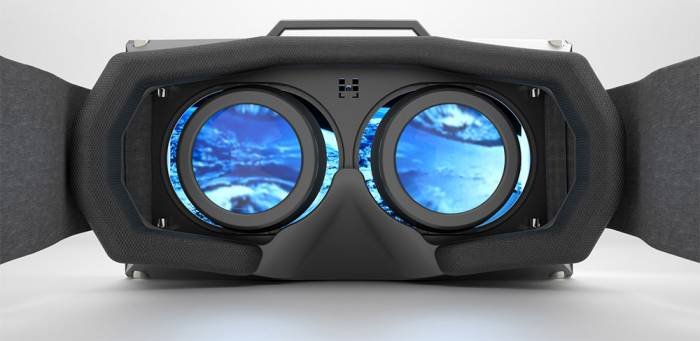
In order to produce a stereoscopic 3D experience, virtual reality begins with a headgear that presents two distinct images, one to each eye. By simulating human eyesight, this enables users to accurately assess distance and depth. The headset’s specialized lenses change focus and field of view, causing virtual things to appear at various distances. To avoid blur and motion latency, high-resolution screens and quick refresh rates typically 90 Hz or more are crucial. Together, these visual components create a believable digital environment that feels continuous and immersive, completely obliterating the real world.
Motion tracking system
Virtual reality feels realistic and responsive because of motion tracking. The user’s head and body movements are continuously monitored by sensors such gyroscopes, accelerometers, and external cameras. The system instantaneously modifies the virtual world to reflect the user’s movements, tilts, and turns. Maintaining immersion and avoiding motion sickness depend on this real-time synchronization. Additionally, positional tracking which recognizes movement in real space and hand tracking which allows users to engage with virtual items intuitively without just using controllers are features of advanced VR systems.
Input and interactions
Users become active participants in virtual reality through interaction. VR systems enable users to handle items and navigate surroundings using voice commands, gesture recognition, or portable controllers. In order to replicate real-world motions like grabbing or pointing, controllers are outfitted with buttons, triggers, and sensors that detect movement and position. Haptic feedback, which simulates touch by producing tangible sensations like vibrations, is a feature of several systems. Because it enables users to connect meaningfully with the virtual world, this layer of interaction is crucial for improving the intuitiveness, immersion, and realism of experiences.
Real time rendering
The technique of creating and presenting the virtual world dynamically while the user interacts with it is known as real-time rendering. A powerful CPU, either integrated into the headset or in a linked computer, uses 3D engines to produce intricate sceneries with dynamics, lighting, textures and physics. To guarantee fluid visuals and lower latency, the system must render frames at high speeds, usually between 60 and 120 frame per second. Immersion may be disrupted or discomfort may result from any delay. In order to make the visual world feel responsive, realistic, and constantly dynamic, rendering rapidly adjusts to user movements and inputs.
Types of virtual reality
Fully Immersive Virtual Reality
Fully immersive virtual reality provides the highest level of digital engagement by completely replacing the user’s real-world surroundings with a simulated environment. Motion-tracking sensors, controllers, and VR headsets are worn by users to enable natural interaction in the virtual environment. For increased realism, advanced systems might incorporate full-body tracking and haptic feedback. Realistic scenarios are essential in gaming, military simulations, and medical training, all of which make extensive use of this category. Instead of viewing the virtual environment from the outside, the objective is to give people a strong sense of presence.
Semi-Immersive Virtual Reality
Semi-immersive virtual reality combines elements of both real and virtual environments, offering partial immersion. Large displays, projection systems, or simulators are used to show a virtual environment while users are still conscious of their physical surroundings, as opposed to totally isolating people. This kind is frequently employed in industrial applications, driving simulations, and flying simulators. Without the need for complete VR equipment, it offers a genuine experience. For professional training where complete immersion might not be required, semi-immersive virtual reality strikes a balance between cost, accessibility, and efficacy.
Non-Immersive Virtual Reality
The most basic type of virtual reality is non-immersive, in which users interact with a virtual world using common tools like a computer screen, keyboard, or mouse. Users maintain complete awareness of their actual surroundings without the use of a headset. It is helpful for simulations, virtual tours, and simple games since it still permits interaction with 3D settings despite its limited immersion. This kind is widely available, reasonably priced, and frequently utilized in corporate and educational settings where interaction and visualization with digital worlds are still beneficial but complete immersion is not required.
Applications of virtual reality
Gaming and entertainment
By immersing players in the game world, virtual reality has completely changed gaming. Users engage physically in a 3D environment rather than manipulating characters from a screen. For instance, players can cut blocks with motion-controlled lightsabers in games like Beat Saber, which makes for an extremely captivating experience. VR is also employed in cinematic storytelling and virtual concerts, where viewers can examine events from various angles, enhancing emotional engagement and connection beyond conventional media formats.
Education and training
By transforming theory into experience, virtual reality improves learning. In an interactive manner, students can investigate scientific ideas, historical occurrences, or intricate systems. For example, students can conduct virtual field trips to locations like deep space or the Great Wall of China using platforms like Google Expeditions. VR is utilized in engineering laboratories, flight simulators, and technical skill development in professional training to lower risk and enhance comprehension and retention through practical learning.
Healthcare
VR is utilized in healthcare for both training and treatment. Before performing actual operations, surgeons can hone their expertise by practicing intricate procedures in a risk-free setting. VR is also employed in therapy, such as in the controlled exposure treatment of PTSD or anxiety disorders. Osso VR, which offers physicians realistic surgical simulations, is one example. Additionally, by providing realistic surroundings to divert patients during treatments or recuperation, virtual reality aids in pain management.
Real estate and Architecture
Virtual reality (VR) enables clients to physically view or explore properties prior to their construction. Virtual tours are used by real estate firms to exhibit properties so that potential purchasers can virtually explore locations. Before building starts, architects utilize virtual reality (VR) to visualize plans and make changes. Businesses that use tools like Matterport, for instance, produce immersive property walkthroughs that help developers and purchasers make better decisions while saving time.
Business and remote collaborations
By establishing shared virtual workspaces, virtual reality is transforming team collaboration. No matter where they are physically located, employees may meet, present, and engage in a 3D environment. Remote teams may collaborate as if they were in the same room thanks to platforms like Microsoft Mesh. Particularly for multinational corporations and remote-first businesses, this increases productivity, lowers travel expenses, and improves communication.
Military and Aviation
In high-risk industries like the military and aviation, virtual reality is widely employed for simulation-based training. Pilots and soldiers can practice in realistic flight or battle situations without actually being in risk. Pilots can safely rehearse emergency procedures by using flight simulators, which mimic cockpit controls and ambient circumstances. VR is used by organizations such as the U.S. Air Force to train soldiers for actual missions, increasing readiness while lowering expenses and risks.
Engineering and product design
VR is used by engineers and designers to develop, test, and improve items before to actual manufacturing. This speeds up innovation and lowers development expenses. A virtual prototype allows designers to explore it, spot errors, and make changes instantly. Before creating real models, the automotive and manufacturing sectors mostly rely on virtual reality (VR) to envision complicated systems and increase design accuracy.
Benefits & Limitations
Benefits
- VR offers a very immersive experience that allows users to feel as though they are physically present in a virtual setting.
- By enabling users to interact with concepts through lifelike simulations, virtual reality (VR) improves learning.
- VR makes it possible to practice safely in dangerous situations without facing repercussions in the real world.
- Through active participation, VR boosts user engagement and enhances knowledge retention.
- VR makes it possible to access events, gatherings, and settings from a distance without having to travel.
- Because VR requires less physical resources and training sets, it can lower long-term expenditures.
- VR opens up new commercial prospects in sectors including education, gaming, and healthcare.
Limitations / Drawbacks
- Because of the expense of development and technology, VR systems can be costly.
- For certain individuals, VR may result in motion sickness, vertigo, or eye strain.
- Compared to conventional internet platforms, VR content is still scarce.
- Hardware limitations on VR technology include processor power and battery life.
- If VR is used excessively, it can cause social isolation.
- Beginners may find it challenging to use VR efficiently due to its learning curve.
- VR is mostly dependent on specialist equipment, which makes it inaccessible to many consumers.