

Introduction
A bakery frontend site is one of the easiest ways to develop real-world frontend skills while creating something visually powerful. It is built using HTML, CSS, and JavaScript.
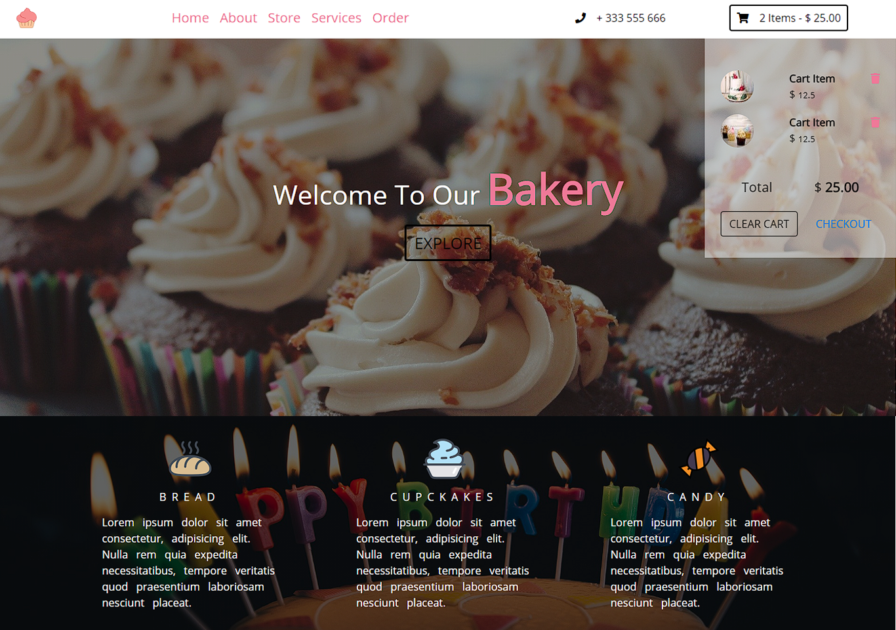
The bakery frontend site is the visual and interactive part of a customer’s view of a bakery website. It completely ignores backend logic, like as databases or order processing, in favor of display, layout, and user experience. A bakery’s frontend objectives are straightforward: draw attention, properly display products, and direct users to take action, such as visiting the store or placing an order. This project is using bootstrap which is a CSS framework that creates a responsive website.
The project is a useful option for store owners who wish to create an online presence because it was created especially for bakeries. Customers can explore a variety of goods, including cakes, pastries, and sweets, and place orders directly through the platform, which functions as an eCommerce website. This enables bakeries to expand their customer base beyond the confines of a physical location.
A great bakery frontend site focuses on visual storytelling. High-quality photos of cakes, pastries, and bread are essential since users rate bakeries based on their appearance before anything else. Clean navigation, quick loading times, and mobile responsiveness are crucial. If the site is slow or confusing, users will go instantly, regardless of how amazing the bakery is in reality.
Unlike generic websites, a bakery frontend must elicit emotion. It should be pleasant, inviting, and visually appealing, with soft colors, elegant typography, and little clutter. Every design decision should serve one purpose: to make the user want the product.
Building the project
HTML, CSS, and JavaScript are commonly used to build bakery frontend projects. HTML is used to define the structure of a website, including features such as graphics, headlines, product sections, and navigation menus. CSS is used to style these elements, providing the site’s visual identity through colors, spacing, layouts, and responsive design.
Modern bakery websites employ advanced CSS methods like Flexbox and Grid to properly arrange things and create visually pleasing sections. Animations such as hover effects, transitions, and smooth scrolling are frequently used to improve user experience.
JavaScript is used to add interactivity to the website. JavaScript powers features such as picture sliders, menu filtering, and dynamic content changes. This makes the webpage more engaging instead of static.
Images play an important part on bakery websites, thus good optimization and responsive handling are required to ensure fast loading and seamless operation. The project is typically designed to work on all devices, such as PCs, tablets, and smartphones.
Overall, the bakery frontend project aims for simplicity, beauty, and usability. It is a beginner-to-intermediate project that teaches developers about real-world UI/UX design and responsive web programming.
How to use this project?
- Download the project.
- Set up Editor / IDE. (vs code, sublime text, atom)
- Open the project.
- Execute the code on browser. (chrome, firefox)
- Use the project.
- Enjoy!
Stop watching tutorials and start creating something that genuinely demonstrates your ability. This bakery frontend project is more than just practice work; it is a real-world asset that you can use in your portfolio, freelance, or even sell as a product to a small business.
Click the button below to get the source code for this project.
FAQs
What is a bakery frontend project?
A bakery frontend website project is the visual component of an online bakery platform that allows customers to browse products, examine details, and interact with the interface. It focuses on design, layout, and user experience over backend processes.
Which technologies are used in this project?
This project is built with HTML for structure, CSS and Bootstrap for styling and responsiveness, and JavaScript with jQuery for interactivity and dynamic behavior.
3. Is this project suitable for beginners?
Yes, this project is beginner-friendly. It uses widely known technologies and follows a simple structure, making it easy to understand and customize.
4. Can customers place orders through this website?
Yes, the project is designed as an eCommerce-based site where customers can browse bakery items like cakes and sweets and place orders online.
5. Is the website responsive on mobile devices?
Yes, Bootstrap ensures that the website adapts to different screen sizes, including smartphones, tablets, and desktops.
6. What role does jQuery play in this project?
jQuery simplifies JavaScript tasks such as handling events, animations, and DOM manipulation, making the website more interactive and efficient.
7. Can this project be customized for different bakery businesses?
Yes, the design, products, and content can be easily customized to match any bakery’s branding and offerings.
8. Does this project include payment integration?
The basic version focuses on frontend design and ordering flow. Payment integration can be added later using backend technologies or APIs.
9. Why is Bootstrap used instead of pure CSS?
Bootstrap speeds up development by providing pre-designed components and a responsive grid system, reducing the need to build everything from scratch.