

Introduction
The virtual pet game project is ideal for beginners and intermediate developers who want to learn game logic, state management, and user interaction while creating something engaging.
A virtual pet game is a digital simulation where users take care of a computer-generated pet by meeting its basic needs, such as food, happiness, rest, and attention. The core idea is simple: the pet reacts based on how well the user looks after it. When properly cared for, the pet appears happy and active; when neglected, it may become sad, tired, or inactive. This interaction creates a sense of responsibility and emotional connection between the user and the virtual character.
Unlike traditional action or competitive games, virtual pet games focus on care-based gameplay. The experience is calm, safe, and suitable for all age groups. Players typically perform actions like feeding the pet, playing with it, or checking its mood. These actions directly influence the pet’s internal states, which change gradually over time. This time-based behavior encourages users to return regularly, increasing engagement without relying on aggressive mechanics.
Modern virtual pet games are often built using web technologies such as HTML5, CSS, and JavaScript, allowing them to run directly in browsers without installation. Many developers use lightweight game frameworks to handle animations and interactions efficiently. This makes virtual pet games popular as beginner-friendly projects for learning game logic, state management, and user interaction in a practical way.
In this web-based virtual pet project:
- The pet reacts visually to user actions
- Feeding increases happiness and energy
- Neglect causes visible mood changes
- The gameplay is safe, non-violent, and suitable for all ages
Core gameplay
Feeding the Pet – Feeding is the primary interaction in a virtual pet game. When the pet becomes hungry, its behavior or appearance changes to alert the user. Providing food restores energy, stabilizes health, and increases happiness, reinforcing the idea that timely care has a direct impact on the pet’s overall well-being.
Happiness and Mood System – The happiness system reflects how well the pet is treated. Visual cues such as animations, expressions, or posture show the pet’s emotional state. A happy pet appears lively and responsive, while neglect leads to sad or tired behavior, encouraging players to stay attentive and engaged.
Time-Based Changes –
The pet’s condition evolves continuously over time rather than instantly. Hunger slowly increases, and happiness gradually decreases if no action is taken. This time-based system adds realism and challenge, motivating users to check in regularly and maintain consistent care for the pet.
Visual Feedback – Visual feedback plays a crucial role in guiding user actions. Changes in animations, icons, colors, or expressions instantly communicate the pet’s status. This immediate response helps users understand the impact of their decisions, making gameplay intuitive, engaging, and easy to follow without complex instructions.
Building the project
The Virtual Pet game is developed using HTML5, CSS, JavaScript, Phaser, and sprite-based images to create an interactive and engaging browser experience. To run the project correctly, a local server environment is required because the game loads assets dynamically. Tools such as XAMPP, WAMP, or MAMP can be used, and developers can choose whichever setup they are most comfortable with.
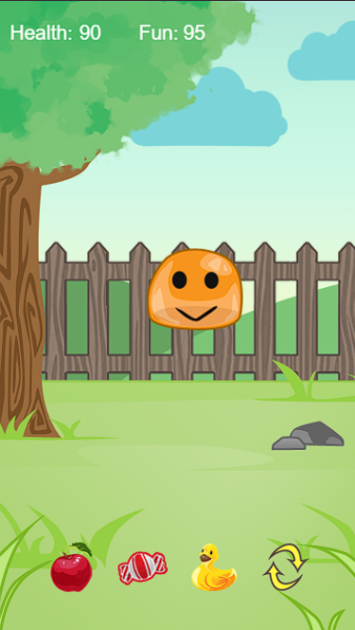
The core gameplay focuses on safely interacting with a virtual pet. The objective is simple: feed the pet, keep it healthy, and maintain its happiness. The game uses a fixed background image and opens with a welcome screen. Once the user taps or clicks the screen, gameplay begins. Players can click and drag the pet freely across the screen, allowing natural interaction. Smooth animations are applied to the pet sprite, making movements and reactions feel lively. Action buttons let users play with the pet, reinforcing engagement and emotional connection.
Health management is a key mechanic. Feeding the pet the correct items, such as an apple, increases health, while unwanted or incorrect food reduces health. If the health level drops too low, the game ends. Food items can be clicked and dragged toward the pet, making interactions intuitive and visual. This project is intentionally designed to be simple, safe, and beginner-friendly, inspired by classic virtual pet games once popular on early mobile devices. Beyond entertainment, it is highly effective as a learning project. Developers gain hands-on experience with game logic, asset handling, animations, and user interaction.
How to use this project?
- Download and extract the source code.
- Set up a code editor or IDE.
- Open the project folder on the editor. (vs code, sublime text, atom)
- Launch the program in the browser. (chrome, firefox)
- Play the game.
- Enjoy & Share.
Download the Virtual Pet project today and explore the code hands-on. Run it on your local server, experiment with animations, and modify the gameplay logic to make it your own. Use this project to strengthen your HTML, CSS, and JavaScript skills, and showcase it in your portfolio as a practical web-based game.