



Introduction
A classic car frontend site is ideal for car enthusiasts who want to showcase classic cars through a modern yet nostalgic web experience. It is responsive, aesthetic, easy to use, and implement as well.
The Classic Car Frontend Site is an engaging one-page web project built using HTML5, CSS3, and JavaScript, without relying on any external frameworks. The main objective of this project is to demonstrate how pure frontend technologies can be used to create an interactive, responsive, and visually striking website focused on classic automobiles. Responsiveness is achieved entirely through CSS media queries, ensuring the site adapts smoothly across different screen sizes and devices. A standout feature of this project is its 3D visual effect.
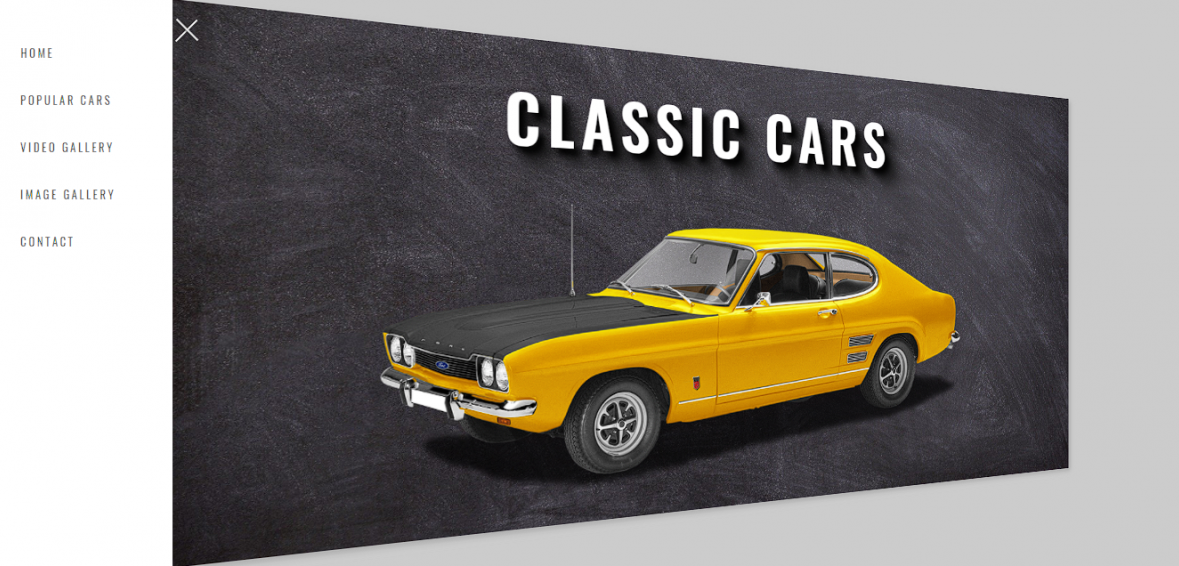
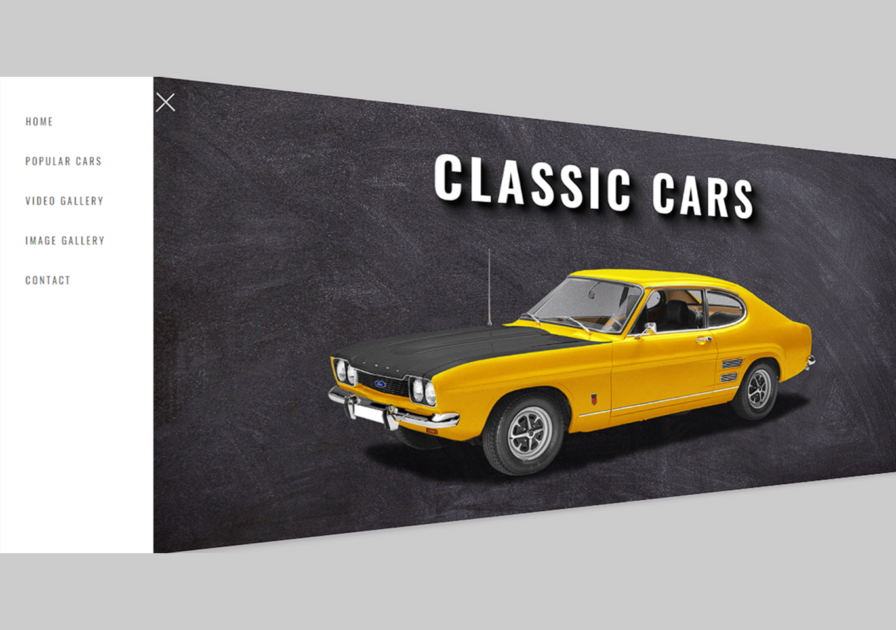
When the hamburger icon is clicked, a sidebar navigation menu slides in, and the main page tilts backward, creating an immersive 3D perspective that immediately grabs the user’s attention. The website uses smooth scrolling, allowing users to move seamlessly between sections when clicking menu items. There are five distinct sections, each designed with unique animations and effects. The home section features minimal classic-style text with shadow effects that create a subtle 3D look, paired with a striking classic car image. The popular cars section displays car images along with pricing details and hover effects that enhance interactivity.
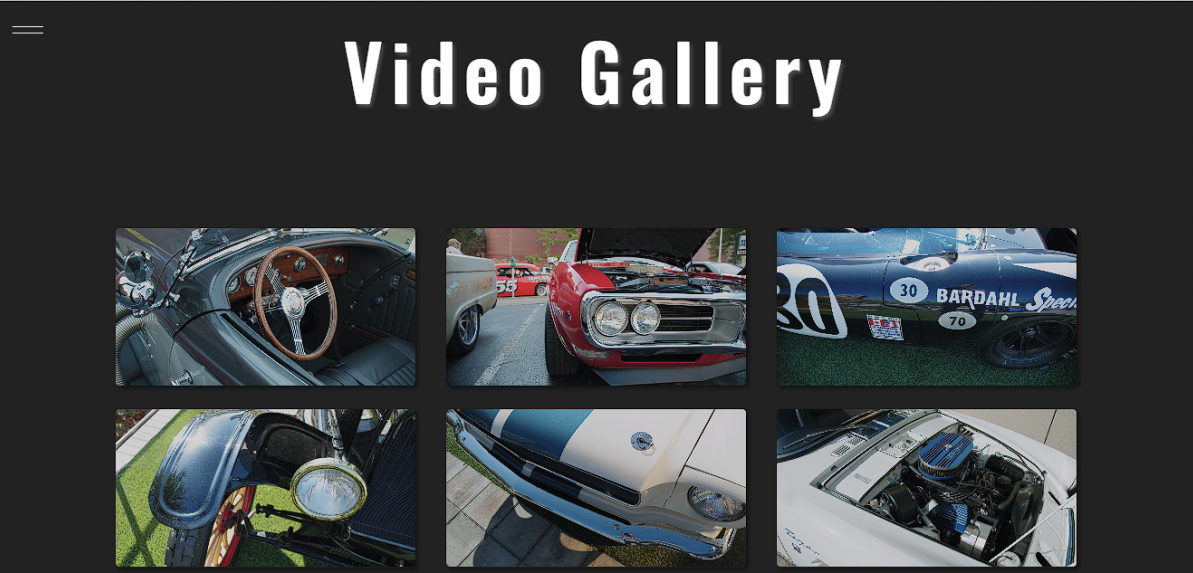
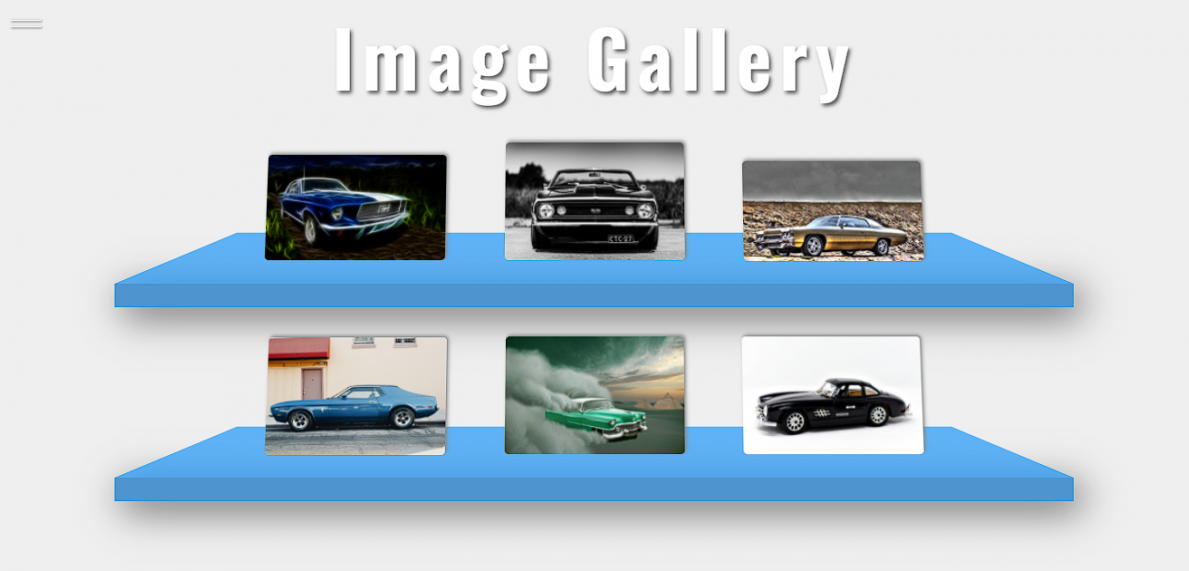
The video gallery section is particularly engaging, as hovering over car images automatically plays embedded videos. The image gallery uses a bookshelf-style layout created entirely with CSS, where car images respond with hover effects. Finally, the footer section includes a contact form and copyright information, giving the site a complete and professional finish. See some screenshots below.
Purpose and Vision
- Showcase classic car collections in a museum-like format
- Share the history and legacy of iconic vehicles
- Educate younger audiences about automotive heritage
- Promote restoration culture and craftsmanship
- Build communities around classic automobile enthusiasts
Building the project
HTML5, CSS, and JavaScript are the fundamental web technologies used in the development of the classic vehicle frontend website. While CSS manages the site’s overall appearance and visual presentation, HTML is in charge of organizing and positioning elements within the browser. Without the use of any frontend frameworks, this project makes extensive use of CSS methods to provide a polished and eye-catching layout.
Every component, including typography and layout placement, is given unique styling. High-quality automobile photos are incorporated to increase the visual impact, and Google Fonts are employed to improve the website’s classic vibe. The unique 3D bookshelf-style image gallery, which gives the interface more depth and uniqueness, is part of the overall page layout that was created entirely with CSS.
Particularly in the video gallery area, where videos play automatically when visitors hover over the automobile images, JavaScript is used sparingly to improve engagement. This keeps the functionality simple and targeted while increasing user engagement. The website features a classic 3D-inspired interface and is fully responsive through the use of CSS media queries, proving that responsiveness does not always require external frameworks.
How to use this project?
- Download the project.
- Extract the zip file & get the folder.
- Set up an editor or IDE. (vs code, sublime text, atom)
- Open the project folder in the editor.
- Launch the project in the browser. (Google Chrome, Mozilla Firefox)
- Use the project.
- Enjoy & Share.
Ready to bring classic cars to life on the web?
Download the Classic Car Frontend Site project today, run it on a live server, and explore how pure HTML5, CSS3, and JavaScript can create stunning 3D effects, smooth animations, and responsive layouts, then customize it to showcase your own passion for classic automobiles.
FAQs in short
1. What is the Classic Car Frontend Site project?
It is a one-page frontend website designed to showcase classic cars using pure HTML5, CSS3, and JavaScript with a strong focus on visuals, animations, and user experience.
2. Does this project use any CSS or JavaScript frameworks?
No, the project is built without any frameworks. Responsiveness, layout, and effects are handled entirely using custom CSS and vanilla JavaScript.
3. How is responsiveness achieved in this project?
The site uses CSS media queries to adapt the layout across different screen sizes, ensuring a smooth experience on desktops, tablets, and mobile devices.
4. What makes the 3D effect in this project unique?
The 3D effect is created using advanced CSS transforms. When the hamburger menu is clicked, the page tilts and a sidebar appears, giving a realistic depth and perspective effect.
5. How does the video gallery work?
In the video gallery section, JavaScript enables videos to play automatically when users hover over car images, creating an interactive and engaging browsing experience.
6. Is an internet connection required to run the project?
Yes, an internet connection is needed to load external resources such as Google Fonts and online icons used in the design.
7. Who is this project best suited for?
This project is ideal for beginners and intermediate frontend learners, UI/UX enthusiasts, and car lovers who want to showcase classic automobiles through a visually rich and modern website.