

Introduction
Scrum development is an agile framework useful for solving complex problems. It provides products that are delivered productively and creatively at the highest value possible.
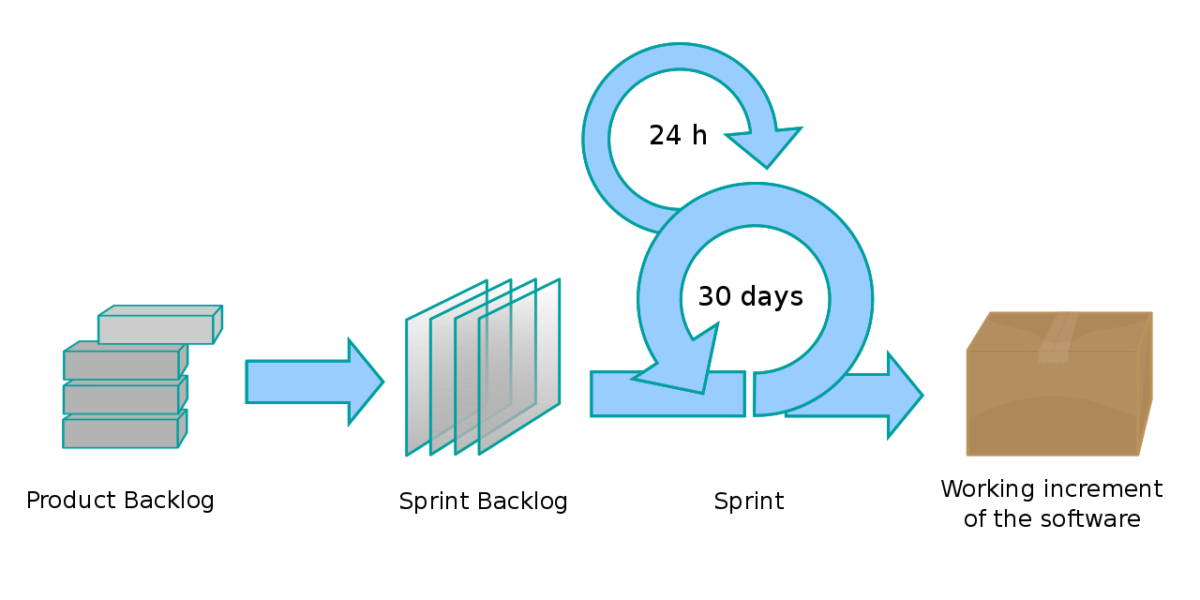
Scrum stresses cooperation, flexibility, and providing value rapidly by dividing work into short cycles known as Sprints, which typically run one to four weeks. At the end of each Sprint, the team provides a potentially shippable product increment. Scrum development’s fundamental principles are transparency, inspection, and adaptation. It enables cross-functional, self-organizing teams to constantly improve their work by leveraging feedback loops and real-time modifications. Scrum ensures that changes in client wants or market conditions may be addressed swiftly and without disrupting the project.
Scrum development teams are comprised of three important roles:
- Product Owner is in charge of optimizing product value through backlog management and priority setting.
- Scrum Master – a facilitator who ensures the team adheres to Scrum practices, removes barriers, and increases team productivity.
- The Development Team is a group of specialists who perform the actual work to produce product increments.
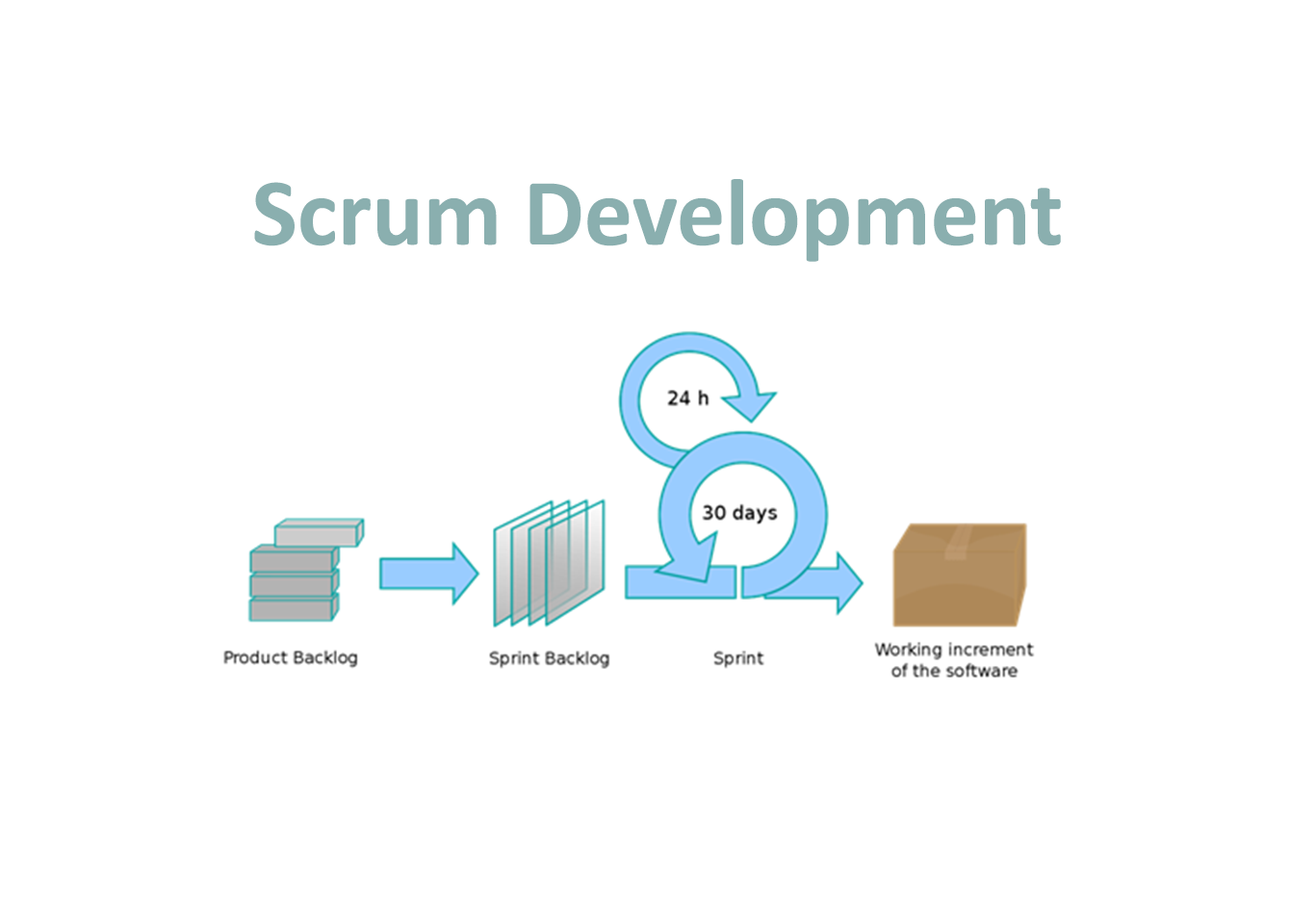
The method revolves around Scrum rituals, which include Sprint Planning, Daily Scrum (stand-up), Sprint Review, and Sprint Retrospective. These meetings assist to align the team, identify difficulties, and continually improve the process. Scrum also relies on artifacts like the Product Backlog, Sprint Backlog, and Increment to enable transparency and progress tracking.
Scrum development is also used in non-technology fields such as marketing, education, and finance. Its emphasis on delivering tiny yet valuable bits of labor makes it perfect for projects where requirements are likely to shift frequently.
History of Scrum development
Jeff Sutherland and Ken Schwaber formally established Scrum in the early 1990s to improve software development methods. The word “Scrum” was inspired by Hirotaka Takeuchi and Ikujiro Nonaka’s 1986 Harvard Business Review article “The New New Product Development Game,” in which they highlighted how high-performing teams at businesses such as Honda and Canon used cross-functional collaboration to accelerate invention. Sutherland and Schwaber used these concepts to develop a flexible, iterative framework known as Scrum.
Scrum development made its public debut in 1995 at the Business Object Design and Implementation Workshop at the OOPSLA (Object-Oriented Programming, Systems, Languages, and Applications) conference. Over the next few years, Scrum gained popularity among Agile practitioners. Sutherland and Schwaber signed the Agile Manifesto in 2001, cementing Scrum’s status as a core Agile framework.
The six principles of Scrum development
- Control over the empirical process.
- Self-organization.
- Collaboration.
- Value-based prioritization.
- Time-boxing.
- Iterative development.
Development phases of Scrum development
Initiation
During the initiation phase, the Product Owner works with stakeholders to articulate a clear product vision and develop the initial Product Backlog, which is a prioritized list of features, enhancements, and fixes that add value. The Product Backlog is updated during the project as new insights emerge. Identifying target users, commercial goals, and technical feasibility are all important considerations. Teams also define the Definition of Done and create an initial plan. This phase establishes the direction for upcoming Sprints and ensures team and stakeholder alignment.
Planning
Each Sprint starts with a Sprint Planning meeting, during which the team selects high-priority items from the Product Backlog to create the Sprint Backlog. The team collaborates on what can be delivered during the Sprint and how the job will be completed. Clear Sprint Goals are specified, and tasks are divided into actionable chunks. During this phase, the team may also engage in Backlog Refinement, which involves clarifying, estimating, and adjusting items for subsequent Sprints. This phase guarantees that the team starts the Sprint with a common understanding and a realistic plan.
ExecutionDuring the execution phase, the Scrum development Team collaborates to finish the sprint backlog items. Daily Scrums (15-minute stand-ups) are used to coordinate work, discuss progress, and identify roadblocks. To develop a working product increment, the team organizes itself, updates task boards, and adheres to engineering best practices. The Scrum Master facilitates by reducing impediments and ensuring that Scrum principles are followed. Continuous integration, automated testing, and code reviews are frequently used to ensure product quality throughout this phase.
Review
At the end of each Sprint, the team does a Sprint Review to showcase the product increment to stakeholders. This working software is assessed against the Sprint Goal and the Definition of Done. Stakeholders share input, ask questions, and suggest new ideas for the Product Backlog. This collaborative session promotes openness and ensures that the product is moving in the right direction. It’s more than simply a demonstration; it’s an opportunity to monitor progress and adjust plans based on real-world feedback.
Retrospective
Following the Sprint Review, the team conducts a Sprint Retrospective a time to reflect on the Sprint and identify areas for improvement. Team members review what went well, what didn’t, and how processes may be improved in the upcoming Sprint. The goal is to continuously improve collaboration, tools, technical processes, and communication. Actionable insights are captured and applied in the following Sprint cycle. The Scrum Master creates a secure platform for honest reflection, which promotes growth and stronger team chemistry.
When to use Scrum development?
- When the requirements are not clearly defined.
- Changes can be required during development.
- When a product needs to be tested.
- When the team has self-management skill.
- When the client is fully available.
- When the client adapts to change.
Benefits and Drawbacks
Benefits of Scrum development
- Faster Time to Market – Scrum’s iterative approach enables teams to deliver working features quickly and frequently.
- Improved Product Quality – Continuous feedback, testing, and reviews assist in detecting and resolving issues quickly.
- Flexible and adaptable – Scrum encourages change, even late in development, making it perfect for dynamic workplaces.
- Customer-Centric – Regular stakeholder interaction ensures that the product meets the needs of its users.
- Better risk management – Short sprints provide early diagnosis of problems, lowering long-term dangers.
- Enhanced Team Collaboration – Daily stand-ups and retrospectives encourage communication and transparency.
- Higher Stakeholder Satisfaction – Frequent releases and feedback loops keep stakeholders involved and satisfied.
- Continuous Improvement – Every Sprint provides opportunities for teams to improve their processes and efficiency.
- Increased visibility – Scrum boards and artifacts make the project’s status obvious to everyone.
- Empowered Teams – Self-organizing teams promote ownership, morale, and innovation.
Drawbacks of Scrum development
- Requires experienced team members – Inexperienced teams may struggle to organize themselves and adhere to process discipline.
- Frequent Meetings – Daily scrums and regular evaluations can be time-consuming and repetitious.
- Scope Creep Risk – Without proper Product Backlog control, shifting priorities can divert attention.
- Hard to scale – Scrum is effective for small teams but difficult to scale across large businesses.
- Role Confusion – Misunderstanding the Scrum roles might result in micromanagement or a lack of accountability.
- Overreliance on Scrum Master – If the Scrum Master is ineffective, the process may fail.
- Lack of Detailed Documentation – Scrum prioritizes working software over extensive documentation, which may pose problems later.
- Difficult for Fixed Scope projects – Projects that require a strict timetable or budget may not fit well with Scrum’s adaptable nature.