

Introduction
A Library Management System in C is one of the most popular academic and beginner-to-intermediate programming projects. It demonstrates how the C programming language can be used to build real-world
A Library Management System in C is a console-based software application built using the C programming language to automate essential library operations such as storing book details, issuing and returning books, and maintaining records. Unlike modern database systems, it typically uses file handling and simple data structures to persist and manage information, allowing users to add, delete, search, and list books through a menu-driven interface.
In this project, each book and transaction is organized with unique identifiers and structured records, enabling systematic tracking of inventory and issued books. The system emphasizes procedural logic, basic data management, and user input handling, making it a foundational exercise for beginners learning how to implement real-world functionality in a low-level language.
For operating and automating the library, these operations are included.
- Storing and organizing book records
- Managing member or student information
- Tracking books and returns
- Maintaining availability and inventory status
- Recording transaction history
Core Objectives of the Project
The main goal of a Library Management System in C is to simulate real library operations while strengthening programming fundamentals.
- Designing structured data storage for books and users
- Implementing CRUD operations (Create, Read, Update, Delete)
- Managing transactions such as issue and return
- Ensuring data persistence using files
- Creating a menu-driven, user-friendly console system
Key Features of the Library Management System
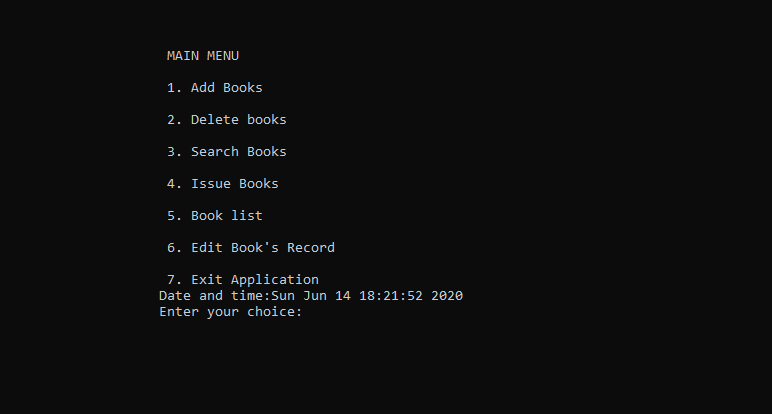
Add Book
The Add Book feature allows the librarian to enter new book details into the system, such as book ID, title, author, and quantity. These details are stored permanently using file handling. This function helps expand the library inventory and ensures new resources are properly recorded.
Delete Book
The Delete Book feature removes a book record from the library system using its unique book ID. It is used when books are damaged, outdated, or lost. The system updates the stored file to ensure the deleted book no longer appears in searches or listings.
Search Book
The Search Book function enables users to find specific books quickly using parameters such as book ID or title. It scans stored records and displays matching results. This feature saves time and improves usability by avoiding manual record checking in large collections.
Issue Book List
The Issue Book List displays details of all books currently issued to members. It includes information such as book ID, member ID, and issue status. This feature helps track borrowed books, prevent duplicate issuance, and maintain accountability within the library system.
Edit Book Records
The Edit Book Records feature allows modification of existing book information, such as updating the title, author name, or quantity. It ensures records remain accurate over time. This function is essential when correcting errors or updating book details after changes.
Book List
The Book List feature shows a complete list of all books available in the library. It displays stored book records in an organized format. This function helps users view the entire inventory at once and check availability without performing individual searches.
Exit
The Exit option safely terminates the program. Before closing, it ensures all data is saved properly to files. This prevents data loss and maintains system integrity. Exiting the program correctly is important for preserving library records between sessions.
System Architecture Overview
- Input Layer: Takes user input from the keyboard
- Processing Layer: Applies logic such as validation, searching, and updates
- Storage Layer: Uses files to store book and user records
- Output Layer: Displays results and confirmations on the console
Advantages of a library management system
- This project strengthens understanding of loops, conditionals, functions, and file handling.
- Although console-based, the logic mirrors real library software used in institutions.
- C programs are lightweight and fast, requiring minimal system resources.
- This project is commonly accepted in universities and helps build confidence for interviews and exams.
- Concepts learned here apply directly to higher-level languages and enterprise systems.
How to use this library management system?
- Download the project.
- Extract the source code.
- Get the software Dev-C++.
- Set up the code.
- Compile and execute the code.
- Use the software.
- Enjoy!
Download and explore the Library Management System in C to strengthen your core programming skills. Modify the features, add enhancements, and practice file handling and data management hands-on.
If you are a student, use this library management system project to boost your academic performance and build a strong foundation for advanced programming concepts.